Lake County Dog Registration Information
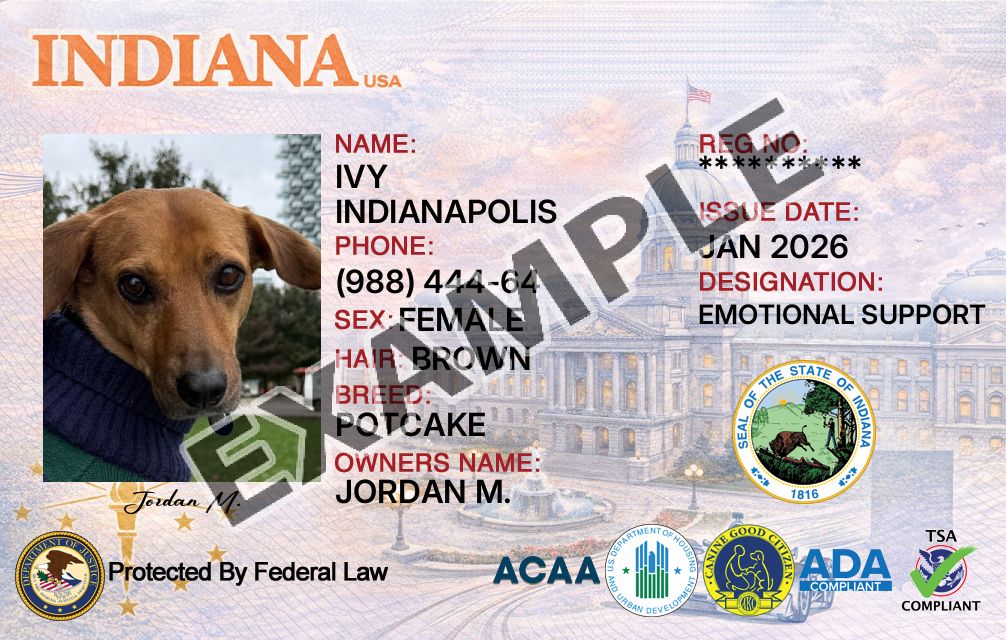
Service Dogs and Emotional Support Animals in Lake, Indiana
If you’re asking “where do I register my dog in Lake County, Indiana for my service dog or emotional support dog”, the key is to separate two different things: (1) local dog licensing (sometimes called pet registration) and (2) a dog’s service dog or emotional support animal (ESA) status. In Lake County, dog licensing is typically handled either by the county animal control authority or by your city/town (depending on where you live inside the county). Service dogs and ESAs are not “registered” through one universal federal registry.
- Dog licensing is a local requirement that may apply to all dogs (including service dogs and emotional support animals), and it often requires proof of current rabies vaccination.
- Service dog status is established by the dog being individually trained to perform tasks for a person with a disability. It is not created by a registry.
- Emotional support animal (ESA) status is generally tied to documentation from a licensed healthcare professional for specific housing-related needs (and does not provide public-access rights like a service dog).
Where to Register or License Your Dog in Lake County, Indiana
The offices below are official government contacts that serve Lake County, Indiana residents for animal control and/or local animal registration and licensing. Because requirements can vary by municipality within Lake County, it’s common to start with the county animal control authority if you’re unsure where your license is issued, then confirm whether your city or town issues tags directly.
Lake County Sheriff’s Animal Adoption & Control Center (Animal Control & Adoption)
City of Hammond — Clerk’s Office (Animal Registrations / Animal Licenses)
City of East Chicago — Animal Control
City of Gary — City Hall (General Directory / Front Desk)
Overview of Dog Licensing in Lake County, Indiana
Dog licensing vs. “service dog registration”
A dog license in Lake County, Indiana is a local pet registration tag or record that helps identify your dog and can support animal services (for example, returning lost pets or documenting rabies compliance). This is different from a dog being a service animal or an emotional support animal. In other words, when you’re looking for where to register a dog in Lake County, Indiana, you’re usually looking for the office that issues a local license/tag—not a special national registry.
Why cities may have different rules inside Lake County
Lake County includes multiple municipalities (cities/towns), and dog licensing requirements can differ depending on whether you live within a specific city’s limits or in an unincorporated area. In practice, this means:
- Some residents handle licensing through a city clerk or city animal control.
- Some residents may rely more on the county animal control authority for guidance, enforcement, and impound/lost-and-found processes.
- Proof of rabies vaccination is commonly required for licensing, regardless of the dog’s role.
Common local requirements (what to expect)
While the exact requirements and fees are set by the issuing authority, licensing processes commonly include:
- Rabies vaccination documentation (often current through the license period)
- Owner contact information and address
- Payment of a licensing fee (sometimes different for spayed/neutered vs. unaltered pets)
- Annual renewal windows and possible late fees (city rules can be time-specific)
What You Need Before Registering a Dog
Documents and information to gather
For most animal control dog license and city clerk licensing processes in Lake County, Indiana, you should plan to bring or submit:
- Proof of rabies vaccination (certificate from your veterinarian is commonly accepted)
- Your ID (a driver’s license or other government-issued identification)
- Proof of residency (especially if the city offers resident rates or requires proof you live within city limits)
- Spay/neuter documentation (if applicable and if it affects the license type/fee)
- Basic pet details: name, breed/type, color/markings, age, sex, and microchip number (if available)
Do service dogs or ESAs need rabies documentation?
Many local health and animal control rules apply to all dogs. Even when a dog is a service dog or emotional support animal, local licensing and vaccination requirements can still apply. If you’re licensing your dog, expect to provide rabies documentation unless your local authority states an exception in writing.
Steps to Register or License a Dog in Lake County, Indiana
Step 1: Confirm which authority issues the license for your address
Start by determining whether your dog license is issued by your municipality (city/town clerk or animal control) or handled through county channels. If you live in a city like Hammond, the city clerk’s office may accept animal registrations directly. If you’re not sure, call the county animal control center and ask where licensing is issued for your street address.
Step 2: Verify renewal timing and fee category
Licensing can be annual and may have specific renewal windows. Some offices set different fees based on resident status, whether your dog is spayed/neutered, and whether it is a new or renewing license. If you’re aiming to comply with dog licensing requirements Lake County, Indiana, ask the office:
- Is the license annual, and what dates does it cover?
- Is there a late fee after a deadline?
- Do you offer a different fee category for spayed/neutered pets?
- Do you issue a tag, a paper license, or both?
Step 3: Submit your documents and payment
In many cases, you can complete registration in person, and some offices allow mail-in registration. Bring your rabies certificate and any required proof of residency/ID, then pay the licensing fee. Once processed, keep the tag with your dog’s collar (or follow your local office’s instructions) and keep a copy of the documents for your records.
Step 4: Keep your records current
Dog licensing is not a one-time task for most households. Mark your renewal deadline on your calendar, keep rabies vaccinations current, and update your contact information if you move—especially if you move between municipalities within Lake County.
Service Dog Laws in Lake County, Indiana
Service dogs: what they are (and what they are not)
A service dog is a dog that is individually trained to do work or perform tasks for a person with a disability. The dog’s legal status comes from the disability-related task training and the handler’s disability-related need—not from a purchased ID card or an online registry.
- Service dog tasks can include guiding, alerting, retrieving items, interrupting harmful behaviors, or other trained tasks directly related to a disability.
- Training matters: the dog must be trained to perform disability-related tasks, not just provide comfort by presence alone.
- Local licensing still may apply: even if your dog is a service dog, local dog licensing and rabies requirements can still apply.
Do you need to “register” a service dog with the county?
There is no single universal federal government registry that you must use to “register” a service dog. If someone tells you your service dog must be registered in a national database for public access, that is not how service dog legal status is generally established. In Lake County, what you usually need is compliance with local public health and animal licensing rules (like rabies vaccination and any local dog license rules).
Practical local tip for Lake County handlers
If your dog is a service dog and you are applying for a local dog license, bring the same items you would for any dog (especially rabies documentation). If your municipality offers a fee waiver or special handling for trained service animals, the licensing office can tell you what they require to apply it (when available).
Emotional Support Animal Rules in Lake County, Indiana
What an emotional support animal (ESA) is
An emotional support animal is an animal that provides comfort and support that may help with a mental or emotional health condition. ESAs are typically recognized in specific contexts (most commonly housing-related accommodations), but an ESA is not the same as a service dog.
ESA vs. service dog: access and licensing
An ESA does not automatically have the same public-access rights as a service dog. However, for local dog licensing in Lake County, Indiana, an ESA is still a dog and may still need to be licensed under local rules the same way as any other household dog.
What paperwork matters most for an ESA
For an ESA, the documentation that typically matters in real-world situations is a letter or documentation from a licensed healthcare professional supporting the need for the animal for accommodation purposes (as applicable). This is different from a “registration certificate.” For dog licensing, the documentation that typically matters most is still your dog’s rabies certificate and any locally required owner/residency information.
Quick Comparison: Dog License vs. Service Dog vs. Emotional Support Animal
| Category | Dog License (Local) | Service Dog | Emotional Support Animal (ESA) |
|---|---|---|---|
| What it is | Local registration/licensing record and tag issued by a city/town or county authority. | A dog individually trained to perform tasks for a person with a disability. | An animal that provides comfort/support that may help with a mental or emotional health condition (often considered for housing accommodations). |
| Who issues it | A local government licensing office (city clerk/treasurer, animal control, or county-designated authority). | No universal government registry; status is based on the dog’s training and the handler’s disability-related need. | No universal government registry; status is typically supported by healthcare documentation for accommodation purposes (as applicable). |
| Common requirements | Often proof of current rabies vaccination; owner/residency info; renewal schedule; fee payment. | Task training; appropriate behavior in public; still must follow local health requirements (like rabies rules). | Housing-related documentation may be relevant; still must follow local animal health requirements and any local licensing rules. |
| Public access | Not a public-access credential. | Generally allowed in public places where pets aren’t allowed, when the dog meets legal standards and is under control. | Does not generally provide the same public-access rights as a service dog. |
| Best use case | Local compliance and identification; supports return-to-owner if lost. | Disability-related assistance through trained tasks. | Emotional support in approved accommodation contexts (commonly housing-related). |
Tip: If you’re primarily trying to comply with local law, focus first on the dog license in Lake County, Indiana process for your municipality and ensure your rabies vaccination documentation is current.
Frequently Asked Questions
What You May Need
-
Proof of rabies vaccinationRabies certificate from your veterinarian is commonly required.
-
Proof of residencyHelpful for city resident rates and city-limit verification.
-
IdentificationDriver’s license or other government-issued ID.
-
Spay/neuter documentation (if applicable)Some offices use this to determine fee category.
-
Payment for licensing feeAsk your local office which payment methods are accepted.
Disclaimer
Local laws, fees, office locations, and contact details can change. Residents should verify the most current information with their local animal services or licensing office in Lake County, Indiana.
Local Notes for Lake County Residents
- If you need animal control dog license Lake County, Indiana guidance and you’re unsure of your city’s process, the county animal control center in Crown Point is a strong starting point for direction.
- If you live in a city that issues licenses through the clerk’s office (such as Hammond), licensing details like renewal windows and in-person hours can be city-specific.
- Keep copies of vaccination records and any accommodation-related documentation (as applicable) in a safe place, separate from your dog’s license/tag.
Register A Dog In Other Indiana Counties
Select your county below to get started with your dog’s ID card. Requirements and license designs may vary by county, so choose your location to see the correct options and complete your pup’s registration.
- Adams County Dog Registration
- Allen County Dog Registration
- Bartholomew County Dog Registration
- Benton County Dog Registration
- Blackford County Dog Registration
- Boone County Dog Registration
- Brown County Dog Registration
- Carroll County Dog Registration
- Cass County Dog Registration
- Clark County Dog Registration
- Clay County Dog Registration
- Clinton County Dog Registration
- Crawford County Dog Registration
- Daviess County Dog Registration
- Dearborn County Dog Registration
- Decatur County Dog Registration
- DeKalb County Dog Registration
- Delaware County Dog Registration
- Dubois County Dog Registration
- Elkhart County Dog Registration
- Fayette County Dog Registration
- Floyd County Dog Registration
- Fountain County Dog Registration
- Franklin County Dog Registration
- Fulton County Dog Registration
- Gibson County Dog Registration
- Grant County Dog Registration
- Greene County Dog Registration
- Hamilton County Dog Registration
- Hancock County Dog Registration
- Harrison County Dog Registration
- Hendricks County Dog Registration
- Henry County Dog Registration
- Howard County Dog Registration
- Huntington County Dog Registration
- Jackson County Dog Registration
- Jasper County Dog Registration
- Jay County Dog Registration
- Jefferson County Dog Registration
- Jennings County Dog Registration
- Johnson County Dog Registration
- Knox County Dog Registration
- Kosciusko County Dog Registration
- LaGrange County Dog Registration
- LaPorte County Dog Registration
- Lawrence County Dog Registration
- Madison County Dog Registration
- Marion County Dog Registration
- Marshall County Dog Registration
- Martin County Dog Registration
- Miami County Dog Registration
- Monroe County Dog Registration
- Montgomery County Dog Registration
- Morgan County Dog Registration
- Newton County Dog Registration
- Noble County Dog Registration
- Ohio County Dog Registration
- Orange County Dog Registration
- Owen County Dog Registration
- Parke County Dog Registration
- Perry County Dog Registration
- Pike County Dog Registration
- Porter County Dog Registration
- Posey County Dog Registration
- Pulaski County Dog Registration
- Putnam County Dog Registration
- Randolph County Dog Registration
- Ripley County Dog Registration
- Rush County Dog Registration
- Scott County Dog Registration
- Shelby County Dog Registration
- Spencer County Dog Registration
- St. Joseph County Dog Registration
- Starke County Dog Registration
- Stueben County Dog Registration
- Sullivan County Dog Registration
- Switzerland County Dog Registration
- Tippecanoe County Dog Registration
- Tipton County Dog Registration
- Union County Dog Registration
- Vanderburgh County Dog Registration
- Vermillion County Dog Registration
- Vigo County Dog Registration
- Wabash County Dog Registration
- Warren County Dog Registration
- Warrick County Dog Registration
- Washington County Dog Registration
- Wayne County Dog Registration
- Wells County Dog Registration
- White County Dog Registration
- Whitley County Dog Registration